
How “Wokeness” turns sensitivity into oppression, discrimination, and censorship
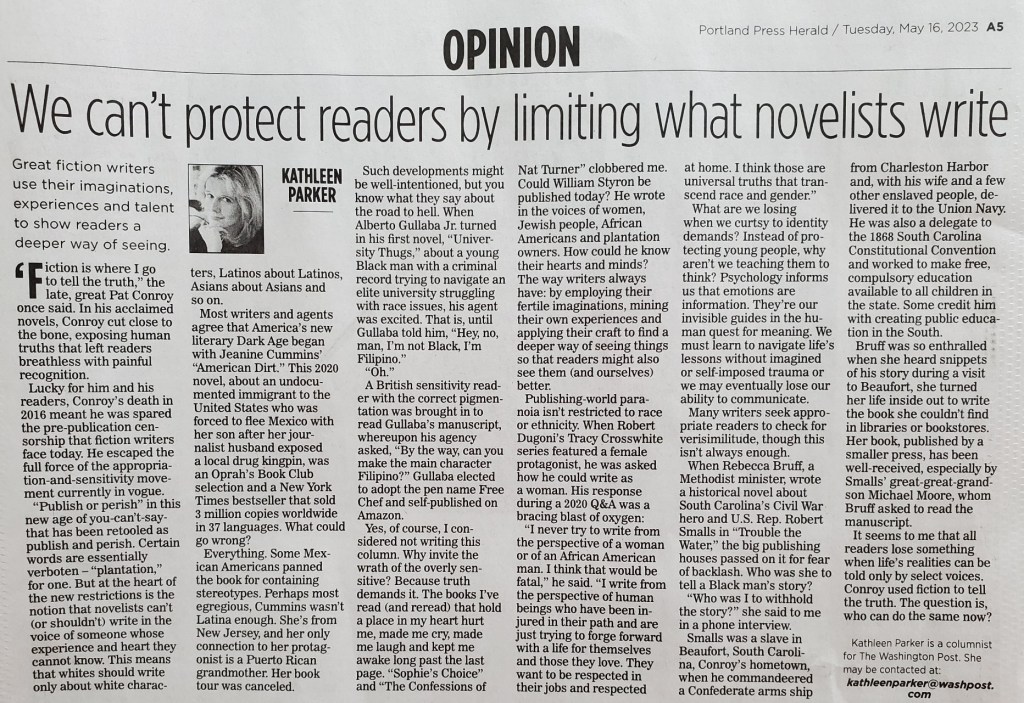
When a concerned friend of mine sent me this article, I’ll admit, I got pretty fired up when reading it. As a writer who strives to be inclusive and diverse with my character cast with race, gender, sexual orientation, mental health, and physical disabilities, I was immediately on guard about the idea that “white people should only write white characters.”
Of course, my immediate concern was for the future of my writing career, given the storylines and characters I develop. When I really got deeper into it my concerns went far beyond my writing and the future of my career. I began to see “woke” sensitivity as a form of censorship that was designed to further oppress minorities including, but not limited to, ethnicity, race, sexuality, and gender/gender identity.
What is “Woke Sensitivity?”
Everywhere I turn people in the news and on social media are talking about “Wokeness.” It’s really “woke” to ask people their pronouns. It is really “woke” to be sensitive to the histories of certain ethnicities and racial minorities. When I look up what “woke” means it, is defined as “the quality of being alert to and concerned about social injustice and discrimination.”
Don’t get me wrong, by definition, being “woke” is a good thing. I fully support bringing social injustices to light and reforming our political and governmental system so it isn’t racist, sexist, transphobic, and otherwise discriminatory.
What I’ve noticed, and what this article helped me see, is that “wokeness” is less about actually counteracting social injustice and discrimination and more about subtly finding ways to further politically motivated, oppressive agendas, just with a shiny new name and definition that makes it sound harmless and progressive.
“Wokeness” in the literary world takes on this tone of, “Well anyone that is a man shouldn’t write women characters,” or “Latinos can only write Latino characters,” it could also look like “How can anyone that isn’t paralyzed from the waist down sensitively and accurately write characters experiencing that disability?”
The article says it best: “Great fiction writers use their imaginations, experiences, and talent to show readers a deeper way of seeing.”
Underneath it all we are all human and have human experiences. Therefore, any human being should be able to accurately, sensitively, and mindfully write about other human beings – regardless of race, gender, sexual orientation, age, etc. All it takes is the proper research, dedication, awareness of harmful stereotypes and the mindful decision not to exploit those harmful stereotypes while committing to tell stories about characters and experiences with all the truth we can.
So, if “wokeness” is about counteracting social injustices and discrimination, why is it that in the literary world, “wokeness” is attempting to stifle diversity and inclusion by limiting what novelists write?
Censorship in Disguise
Maybe you’re wondering what’s actually wrong with having Latinos write Latino characters? Well, on the surface there is absolutely nothing wrong with it. I love seeing writers of different ethnic, cultural, and racial backgrounds telling their stories.
The issue is in saying that anyone who isn’t Latino can’t write characters who are Latino.
Why is that a problem, is probably the next question you’re thinking about.
Statistically speaking, white authors, as of 2021, make up 75.58% of published authors. Black or African American authors make up 5.93%, Asian authors make up 4.93% and Latino or Hispanic authors make up 2.96%.
The percentages on trans, disabled, and homosexual authors are even smaller.
Now, if white authors were limited to only writing white characters, 75.58%, more than three quarters, of the book market would be straight, white, cisgender characters.
Does that sound very inclusive, diverse, or aware of social injustices? No! It sounds like censorship and another way to oppress minorities.
There is this idea floating around that because those percentages are so low that when straight white people write books with racial, gender, and orientation diversity, they are taking away from black or African American or homosexual authors that could better represent experiences around race and sexuality.
The problem is, the statistics don’t support that. Until there is more racial, orientation, and gender diversity among authors, and if “wokeness” pushes their agenda to limit what novelists can write, a huge group of individuals will be completely cut out of representation in the literary world.
The other side to it is many authors who fit into those minorities don’t necessarily want to write books about their experiences or with characters who share their struggles. They just want to tell good stories. I’ve spoken to BIPOC authors who only got a book deal based on their stories about racial inequality, but no publisher cared about them if they wrote regular fantasy, science fiction, or other popular genre fiction. So, because of the “wokeness” in literature, authors in minorities are pigeonholed into writing books that may not align with their writing passions simply because they align with her personal experiences.
It completely paves the way for a white, straight, cisgender dominated literary world where publishers control who publishes what content. That is censorship, oppression, and discrimination.
Bad Writing vs. Inclusive Writing
Earlier I mentioned harmful stereotypes related to race, ethnicity, gender, orientation, and disability. The biggest issue with writers writing characters outside their race, gender, orientation, etc. is when the writing is bad.
Bad writing comes from using harmful stereotypes and not doing the proper research.
I spoke to a fellow writer once who was basing their book in a country and culture with very specific naming conventions. He was married to a woman from this culture but when he wrote his first draft and had her read it, she found all kinds of errors in the names he used for his characters because of the specific naming conventions.
As a result, he and his wife worked together to ensure that character names followed the culturally appropriate conventions. Anyone from that culture reading the book wouldn’t feel insulted or angry because the names were improperly handled.
This is an example of good writing and doing the research. It also shows an author that cares about representing the truth and is committed to respectful representation.
I know a lot of writers who write historical fiction based in Rome or Greece. Before writing about either culture, they do extensive research into clothing, food, colloquialisms, historical events and laws, etc. They go beyond just researching “what” things looked like, though. They aren’t looking just at what was worn but why it was worn.
This allows them to give the most accurate, truthful, and authentic representation of Greek or Roman culture and lifestyle.
Whether researching through firsthand experience –someone that is a part of the culture, race, ethnicity, orientation, etc. that you wish to represent—or using academic research materials, writers can find all the necessary components to respectfully and accurately portray people of all walks of life.
Despite what “wokeness” would have us all believe, when you write something from the heart, dedicate yourself to accurate, respectful portrayal, and commit to giving each character and their background the proper attention to history and detail, there’s no reason why novelists shouldn’t be able to write about anyone or anything.
Too often, I see authors trying to be “diverse” and they end up being offensive through harmful stereotypes and blatant ignorance. However, it isn’t the fact that straight writers are writing homosexual characters that is the problem. It’s the fact that there has been so little emphasis on respectful, accurate representation beyond straight, cisgender, white, neurotypical people that allows these stereotypes to fester and spread, promoting ignorance and offensive material in literature.
That is the true social injustice.
The Role of Sensitivity Readers
Low and behold, a little-known fact, there is an entire industry around ensuring authors are representing cultures, ethnicities, races, orientations, genders, etc. outside their own.
This is where sensitivity readers come in. A very beneficial, and some might say necessary, resource to diverse and inclusive authors. Unfortunately, it is a small industry that isn’t utilized nearly enough, in my opinion.
Typically, sensitivity readers can be hired by a publisher before a book is published to read a manuscript and root out anything offensive, inaccurate, or stereotypical. Though their role isn’t specifically to edit a manuscript, they make notes and offer more details or explanations if asked. Often, they have an experience or identity that the author does not but that the author is trying to portray in their book.
Personally, I think sensitivity readers are very unsung in the publishing world (granted there are some sensitivity readers who border on censorship – in the case of Roald Dahl and RL Stine, but that’s a different conversation). They are such a valuable resource. A few sensitivity readers have said authors they work with feel a lot of relief when someone with knowledge and with lived experience looks at their portrayal and offers an honest opinion.
Nowadays, you can find anything on the internet and there are freelancing sights where you can hire sensitivity readers. If you’re self-publishing or your publisher isn’t going to spring for the sensitivity read, finding your own sensitivity reader will, in the long run, improve your writing, your novels, and your knowledge. In turn, this can greatly expand your audience and the respect your readers have for you as a writer.
Sensitivity reading is fact checking, suggesting improvements, and avoiding harm. It can only help your writing.
If more publishers worked with sensitivity readers, this whole issue of “white people should only write white characters” would lose all steam. Instead of making an easy policy change to grow a valuable niche industry within publishing, we have “wokeness” telling us there’s no solution other than limiting what authors write.
Now, if there is already an existing solution but people with a “woke” agenda refuse to acknowledge it, see the benefit, or present it as part of their argument, again I’m led back to thinking that the true goal is to oppress and discriminate without actually calling it that.
Conclusion
At the end of the day, bad writing is bad writing but bad writing and woke sensitivity aren’t mutually exclusive, and they shouldn’t be.
Good novelists shouldn’t be limited and censored because some bad writers made some bad decisions with representation in their works. In an industry dominated by straight, white, cisgender, neurotypical authors (percentile-wise), the scope of literary works shouldn’t be restricted to representing that narrow viewpoint, leaving everyone else without a voice.
Want more in-depth worldbuilding content and flash fiction entertainment? Join the Imaginative Journey for exclusive topics and insights.
My fellow SFF nerds, don’t forget to check out my Books. You never know what you’ll find to pique your interest.
 From Imagination to Creation